At a Glance: |
|---|
A sole proprietor in the Philippines registers in four steps, in this order: DTI business name, barangay clearance, mayor's permit, then BIR. DTI fees run PHP 230 to PHP 2,030 with stamp tax, and BIR charges a PHP 30 stamp tax (its PHP 500 annual fee was removed). Selling through a POS adds a fifth step, the Permit to Use. |
This guide covers the paperwork that makes your shop or food business legal, a sari-sari store included. For the plan and the money, start with our guide to starting a small business and simple business plan guide.

Which office comes first when you register a business?
DTI comes first, because the later offices ask for its certificate (Quezon City, BIR).
Step and office | What you get | Official fee | Online |
|---|---|---|---|
1. DTI (sole proprietor) or SEC (partnership, corporation) | DTI name certificate, valid 5 years | DTI: PHP 230 to 2,030 with stamp tax. SEC: payment assessment form | |
2. Barangay hall | Barangay clearance | Set by the barangay (law) | Ask your barangay |
3. City permits office (BPLO) | Mayor's (business) permit | Varies by LGU (Quezon City bases it on declared capitalization) | Your city's portal, if any |
4. BIR Revenue District Office (RDO) | Certificate of Registration (COR) | ||
5. BIR, per POS or register | Permit to Use (PTU) | Filed by your POS provider |
Requirements vary by LGU (your city or municipality) and change over time, so check with each agency before you go. All sources on this page were read on November 5, 2026.
How do you register a business name with DTI?
Any Filipino who is at least 18 can register a business name in BNRS, DTI's online system. You need one if you trade under a name other than your true name. You pick a territorial scope, check that the name is free, and pay within 7 calendar days. DTI then emails your certificate (BNRS guide).
The fee depends on the scope, plus a PHP 30 documentary stamp tax (DTI FAQ):
Barangay: PHP 200 (PHP 230 in all)
City or municipality: PHP 500 (PHP 530)
Regional: PHP 1,000 (PHP 1,030)
National: PHP 2,000 (PHP 2,030)
Changing the scope later counts as a new application, and late renewal adds a 50% surcharge. A business name is not a permit: DTI's FAQ says you still need a mayor's permit to operate.
When do you register with the SEC instead of DTI?
Partnerships, corporations and one person corporations (OPC) register with the SEC through its eSPARC system.
For a domestic stock corporation, including an OPC, the OneSEC track aims for one-day approval. Other applications go through regular review, and SEC emails the status in three to seven working days (its two eSPARC pages differ).
The barangay, mayor's permit and BIR steps still apply.
Do you need a barangay clearance and a mayor's permit?
Yes. Under Section 152(c) of the Local Government Code (Lawphil's copy), no city or municipality may issue a business permit until you get your barangay's clearance. The barangay must act within seven working days and sets its own fee.
Then file for the mayor's permit at the Business Permits and Licensing Office (BPLO). Not every city checklist lists the barangay clearance, so read yours first.
Quezon City, for example, asks for DTI or SEC proof, a lease or land title, the owner's ID and photos of the location (QC charter, February 2025).
How do you register with the BIR?
Register by the day of your first sale. BIR's Citizen's Charter (2026 edition) counts a 30-calendar-day window from your mayor's permit or DTI certificate, and late registration can carry a penalty. To register online, use ORUS, BIR's system (guide):
Create an ORUS account and fill in BIR Form 1901 for individuals.
Upload a government ID and your DTI certificate.
Choose an Authority to Print your own invoices (the EOPT Act makes it free of charge) or BIR-printed invoices (those cost extra, per the charter).
Wait for your RDO to approve. The charter lists 3 days online.
Pay the PHP 30 stamp tax in ORUS, then download your Certificate of Registration (COR, Form 2303).
The charter lists 1 day for walk-ins at your RDO. If you will invoice only from a POS, ask your RDO which option to pick.
Under the Ease of Paying Taxes (EOPT) Act, BIR stopped collecting the PHP 500 annual registration fee on January 22, 2024, and the invoice is now the principal sales document.
Businesses under PHP 3 million in gross sales are micro taxpayers, with concessions such as a two-page income tax return (see our filing guide).
Then register your books of accounts with BIR Form 1905 (the charter lists no fee and 1 day). When you hire, register as an employer with SSS, PhilHealth and Pag-IBIG. BIR is also rolling out e-invoicing (announced September 23, 2026) for some taxpayers but not micro taxpayers, so ask your RDO.
What is a Permit to Use, and does your POS need one?
A Permit to Use (PTU) is BIR's permit for the POS or cash register you sell from. RMO 24-2023 puts POS systems under BIR accreditation and registration, and your invoice prints the machine's PTU number. StoreHub's BIR guide says each register needs its own PTU.
BIR's charter lists the PTU at no fee and 2 days. Only your POS software supplier's account can apply for you, and you then print the permit from your own account.
Our view at StoreHub
Start BIR's 30-day count from whichever comes first, the DTI certificate or the mayor's permit. The charter names both, and the earlier date is the safe reading.
Give the Permit to Use its own date, and pick your POS while the city permits are in process. Plan opening day around the PTU, not the COR, because the PTU can only start once the COR is out.
For a first shop, a DTI sole proprietorship is the lightest route, because the SEC route has you submit articles of incorporation for review. Move to the SEC when partners come in.
What helps while you register?
The checklist below is free to print, grouped by office.

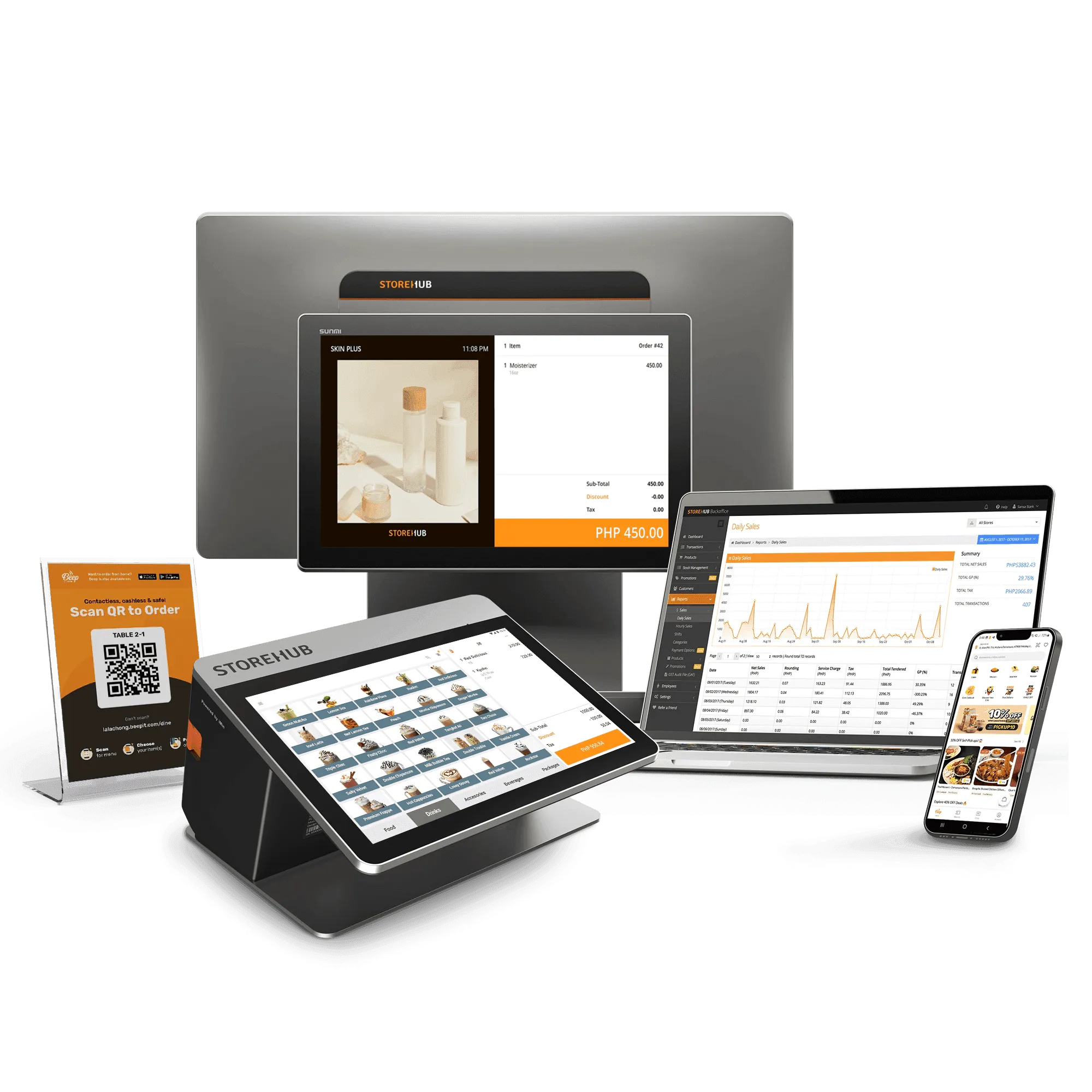
StoreHub is a BIR-accredited POS. Once BIR compliance is on, receipts print in the BIR sales invoice format with your machine and permit details, and Z-readings, X-readings and e-journals are generated for you.
Getting your COR is your own job. Once you have it, StoreHub helps you apply for the Permit to Use for each register. See the point of sale, hardware and pricing pages.

Frequently asked questions
How much does it cost to register a business in the Philippines?
DTI name fees run PHP 230 to PHP 2,030 with stamp tax. BIR charges a PHP 30 stamp tax and, since EOPT, no annual registration fee. Barangay and city fees vary, so ask your barangay and BPLO.
How long does it take to register a business in the Philippines?
It depends on your city, since no official page gives one total. BIR's charter lists 3 days online and 1 day in person, and the barangay has seven working days to act.
Do I issue an Official Receipt after I register with the BIR?
Not for a sale: since EOPT, you issue an invoice, which is now the principal sales document (RMC 77-2024). VAT-registered sellers invoice every sale, and non-VAT sellers invoice sales of PHP 500 or more and any sale a buyer asks for. Rules change, so confirm with your RDO.
Who applies for the Permit to Use on my POS?
Your POS software supplier does: BIR's charter says only the supplier's account can file it for you. StoreHub helps you apply once you have your COR. See BIR-accredited POS systems.
See StoreHub in action
See how StoreHub runs across 20,000+ Southeast Asian businesses. Book a free demo for a live walk-through.