Tips & Tricks
At a Glance: Many F&B and retail businesses struggle to scale not because of demand, but because their POS system creates hidden inefficiencies. Modern platforms like StoreHub help remove these barriers by improving visibility, reducing manual work, and supporting sustainable growth. |
|---|
Most business owners only think about their POS system when something goes wrong at the counter. Payments go through, receipts are printed, sales are recorded — so everything must be fine.
But when a business starts to grow, a POS system is no longer just a tool for taking payments. It becomes the backbone of your operations. And when that backbone is weak, growth doesn’t fail loudly. It stalls quietly.
Many F&B and retail businesses struggle to scale not because of demand, pricing, or even competition — but because their POS system creates invisible costs that compound over time.
These costs don’t always show up as line items on your profit and loss statement, but they affect decisions, staff productivity, and long-term growth far more than most owners realise.
1. Operational Friction That Slows You Down
A bad POS system rarely stops your business from operating. Instead, it makes everyday tasks take longer than they should.
Think about a restaurant where staff still need to manually update stock at the end of the day, or a retail store where promotions must be keyed in item by item. Each task feels manageable on its own. But when repeated daily, across multiple staff members or outlets, those minutes turn into hours of wasted time.
As the business grows, these inefficiencies scale with it. Adding a second outlet means duplicating the same manual processes. Launching new promotions takes longer. Training new staff becomes more difficult because the system relies on workarounds instead of intuitive flows.
Eventually, growth feels exhausting — not because the business is failing, but because the systems supporting it were never built to handle scale.
2. Poor Visibility Leads to Costly Decisions

One of the biggest hidden costs of a weak POS system is poor visibility.
When sales data, inventory levels, and staff performance are fragmented or delayed, business owners end up making decisions based on assumptions rather than facts. You might reorder stock that is already sitting in another outlet. You might assume a product is underperforming when it actually sells well at specific times or locations. You might miss early signs of rising costs because reports are only reviewed at month-end.
In F&B and retail, timing matters. Decisions made too late often cost more to fix. Without real-time data, businesses lose the ability to react quickly — and that delay quietly eats into margins.
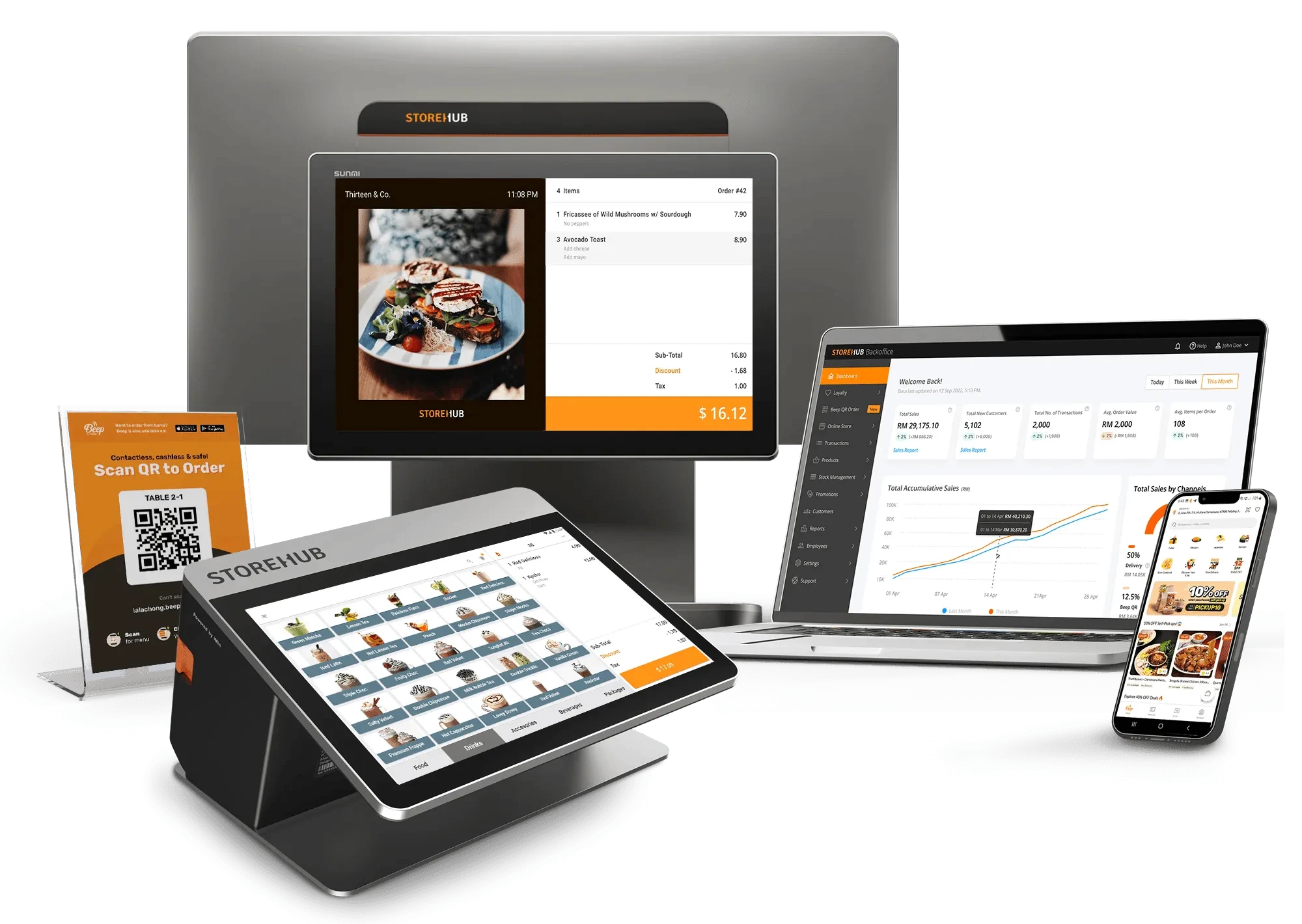
This is where modern POS systems start to matter. StoreHub, for example, is designed to give owners real-time visibility across sales, inventory, and performance, so decisions can be made while there is still time to act — not after the damage is done.
3. Staff Productivity Takes a Hit
When a POS system is clunky, staff end up compensating for it.
Front-of-house teams spend more time navigating screens instead of serving customers. Managers manually verify timesheets because clock-ins aren’t reliable. Owners double-check reports because they don’t fully trust the numbers.
Over time, this creates frustration. Staff mistakes increase, not because the team is careless, but because the system makes simple tasks harder than they need to be. Training new employees also becomes slower, which is especially costly in high-turnover industries like F&B and retail.
A good POS system should reduce cognitive load, not add to it. When systems are intuitive and automated, teams move faster, errors drop, and managers can focus on leading instead of firefighting.
4. Scaling Becomes Risky Instead of Strategic
Many businesses delay expansion not because they lack customers, but because their systems are not ready.
Opening a new outlet, adding a new product line, or introducing loyalty programs all come with operational complexity. If your POS system cannot handle multi-location reporting, centralised inventory, or consistent pricing rules, growth feels risky.
This often leads to conservative decisions: delaying expansion, limiting promotions, or avoiding new sales channels altogether. The cost here isn’t just operational — it’s opportunity cost.
Modern POS systems are built with scalability in mind. Features like centralised dashboards, role-based access, and integrated loyalty tools allow businesses to grow without reinventing processes each time. This is where platforms such as StoreHub tend to stand out, not because they promise growth, but because they remove many of the operational barriers that prevent it.
Final Thoughts
A bad POS system rarely announces itself as the problem.
Instead, it quietly increases workload, slows decision-making, and limits how far a business can realistically grow.
If your business feels busy but stagnant, profitable but exhausting, or successful yet hard to scale, the issue may not be your strategy or your team. It may be the system running underneath everything.
Choosing the right POS system isn’t about adding features for the sake of it. It’s about removing friction, improving visibility, and giving your business the infrastructure it needs to grow sustainably.
Frequently Asked Questions (FAQs)
How do I know if my POS system is holding my business back? If you rely heavily on manual processes, review reports only after the fact, or feel anxious about expanding because operations are already stretched, your POS system may be a limiting factor.
Is upgrading a POS system expensive? The upfront cost is usually far lower than the long-term cost of inefficiency, staff errors, and missed opportunities. Many modern systems are subscription-based, making them accessible for growing businesses.
Can a POS system really affect scaling that much? Yes. Your POS system touches sales, inventory, staff, reporting, and compliance. Weaknesses in any of these areas multiply as the business grows.
Is StoreHub suitable for both F&B and retail businesses? StoreHub is built specifically for F&B and retail operators, supporting over 20,000 merchants across Southeast Asia. With more than 30 integrated features — from real-time sales and inventory tracking to automated SMS marketing, built-in loyalty programs, Kitchen Display Systems, and multi-outlet reporting — StoreHub is designed to help businesses run smoothly at every stage, whether you’re operating a single outlet or scaling across multiple locations.