Tips & Tricks
At a Glance: |
|---|
To increase restaurant sales in the Philippines, F&B owners should focus on great customer service, smarter menus, strong branding, attractive promotions, faster service, and data-driven decisions. While many owners rely on instinct to manage peak hours and best-sellers, real sales data provides far more accurate insights. A POS system like StoreHub helps restaurants track peak hours, best- and worst-selling items, customer behaviour, and staff performance—allowing owners to optimise operations, improve speed, and grow revenue more sustainably. |
Want some useful strategies to increase your restaurant sales in the Philippines?
No worries, we’re here to help with ideas to boost your business revenue!
Whether you run a cafe, restaurant, or bar, here are some helpful tips on how you can get more sales in the food and beverage business!
Here are the topics we’ll be covering in this article:
1. Improve your customer service
This should be a no-brainer, right?
Customer satisfaction should be your number one priority.
And yet, now and the,n every one of us still experiences subpar F&B customer service that makes our dining experience sucky.
You will never reach maximum revenue potential without providing great customer service, even if you serve great food or drinks.
This is why great customer service is highly regarded in the F&B industry.
It is THAT important.
So, please bear in mind that whether you own a well-known local restaurant/cafe or sari-sari store, customer service should be your top priority.
Good customer service = customer loyalty = increase F&B sales!
Tips on improving and providing quality customer service:
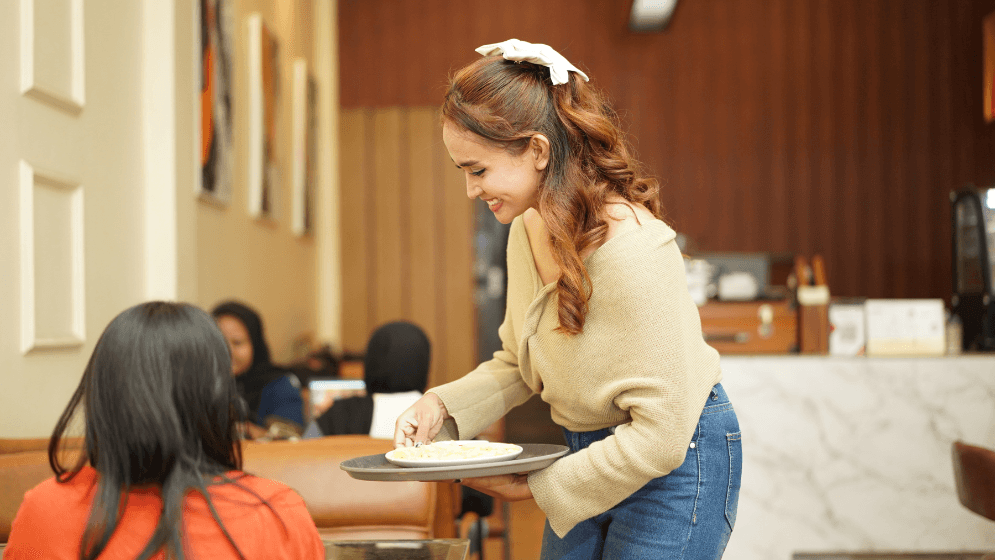
Anticipate customer needs and always look for the next problem solve – eg: offer to refill their glasses of water/tea when their glasses are 2/3 empty.
Check in with your customers from time to time to see how your customers are doing and if they’re enjoying their food/drink.
Let your staff taste your most popular dishes and observe how they’re prepared, so they can give genuine recommendations to your customers, which don’t sound scripted, especially when your employees are up-selling other items on your menu.
Train your servers to put down plates and cups gently, instead of slamming them down haphazardly, which makes your establishment seem unwelcoming.
Process payment faster, so you don’t make your customers wait too long, and so that you can increase table turnover rate.
Loyal/returning customers tend to spend more than new customers. So it’s important to nurture and maintain a good relationship with your loyal/repeat customers.
By having good F&B customer service in the Philippines, you can increase your customers’ likelihood of spending more money at your restaurant. Furthermore, this will give customers a chance to talk about you and even refer you to their family and friends!
Want more customer service tips? Check out our 9 top tips for delivering excellent customer service!
2. Add healthier choices to your menu
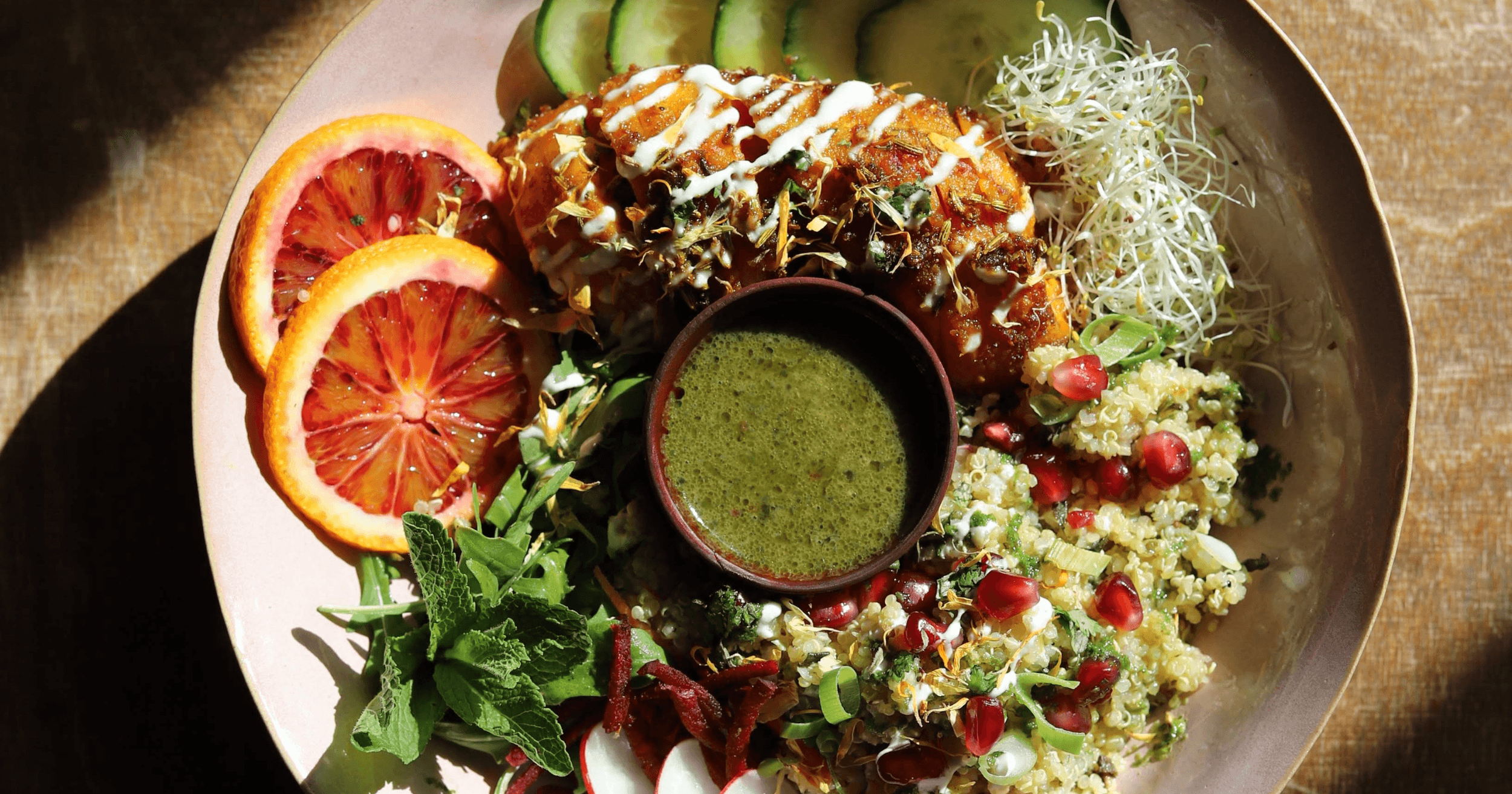
Healthy food is especially popular now in 2020, with all the major healthy-food diet trends we’re seeing this year.
People are more health-conscious nowadays, so your menu should be too.
For instance, Gourmet Gypsy Art Cafe located in Quezon City, offers a variety of healthy yet slightly guilty dishes inspired by cuisines around the world! They’re definitely ahead of the game!
So what should you do as a quick-serve business owner?
Well, for one thing, you can increase the revenue potential of your F&B business by providing healthier options on your menu.
For instance, you can let your customers:
Replace rice with cauliflower rice
Include or increase vegetarian and gluten-free options
Add something as simple as a yummy avocado toast to your breakfast menu.
There are a ton of things you can do to make your menu healthier for your customers!
3. Dive into social media branding
A generic F&B business just won’t cut it nowadays.
Stand out by branding your business and your menu, and by staying active on social media
.
Create some localised recipes with catchy names and remember to post nice pictures of your creations online.
A good example is a local Filipino burger joint, 8Cuts Burger, which firmly established its position in the burger market through its creative and delicious burger creations, such as The Hot Mess, The Bomb Diggidy, Hangover 2.0, and more.
Other 8Cuts innovative menu names and burger choices, they’ve also grown their social media presence through regular, witty updates and beautifully shot product photos.
Tips for branding and creating a strong social media presence for your F&B business:
Post regular updates on Instagram and Facebook (at least 3 times a week).
When taking photos of your cafe/restaurant/food/drinks/etc, face the camera away from a natural source of light so your image will have enough exposure to look nice and bright.
Never use Comic Sans font for any of your designs, unless it’s catered to kids and babies.
Design your store based on your menu and target audience – eg, classic jazz bar/bright and airy brunch cafe.
4. Give special deals to customers
Offer perks such as loyalty stamps or reward cards to your customers.
Keep them loyal by offering them something of value (eg, a free meal or a drink), the more they come back to your F&B store.
People like free stuff, so use that to get them to come back again and again and again!
You can also tap into a new market by forming a partnership with another business.
You could partner up with a clothing shop and create a custom menu for a period of time, and they can give their customers a gift certificate to your cafe/restaurant.
If you serve alcohol, offer cheaper rates during lean hours with a Happy Hour promo, or a “Buy 1 Free 1” deal.
Lunch deals will help you pull in more people who are looking for reasonably priced lunch sets, and So-Mot situated in Metro Manila, is doing an incredible job with their combo deals!
Another idea would be to participate in local events such as food bazaars, mainly to get your name out there.
Special occasions or timely offers are also a great way to get more customers.
Increase your sales during festive seasons with special offers or even special custom menu items (eg: localised gingerbread men during Christmas).
So why not start now if you haven’t done so already?
5. Use science and psychology in menu design
Menu design or menu engineering is the science of how and where to place your items on your menu or menu board.
You need to strategically plan and design your menu in order to maximise profits.
Sounds hard?
Nah, it’s not.
You just need to take some time to look at your numbers, do a bit of research, and test test test!
Data and science will be your best friends in this section.
3 quick steps to menu design:
Cost your menu – calculate food cost percentage and contribution margin
Categorise your menu items according to levels of profit and popularity
Design and test your menu
Quick tips on designing your F&B menu:
Highlight the item you want to sell the most (eg, add a “recommended by chef” icon next to it).
Use visually enticing photographs in your menu if you’re not a fine dining establishment.
Get rid of the currency sign in your pricing (eg: PHP 200 = 200) so your customers focus less on the pain of the price they’ll have to pay for their ordered item.
List your prices right after the food/drink’s description instead of in a column, so that your customers do not focus on the price.
Tell a story in your description and use adjectives (eg, Homemade beef meatballs in a rich tomato sauce served with buttered spaghetti and a sprinkling of freshly grated parmesan).
Use a two-panel menu, with the item(s) you want to sell the most being at either the top left-side or top right-side of the open menu.
Offer a maximum of 7 options per food category so you don’t overwhelm your customers with too many choices.
6. Manage customers’ waiting time
People don’t like waiting. That’s a fact of life.
Unfortunately for customers, waiting is part and parcel of the F&B business, whether it’s in a queue or at a table.
The worst is that the hungrier/thirstier you get, the grumpier you get.
And you definitely do not want grumpy or angry customers in your store.
Long waiting times can ultimately hurt your business.
Customers who are tired of waiting will probably leave your store for your competitors’.
They might even leave a bad review online. And worst of all, they may never come back.
Speed of service is vital for any F&B business.
While you can’t reduce waiting time to an absolute zero, you can reduce waiting time or even optimise waiting time for your customers.
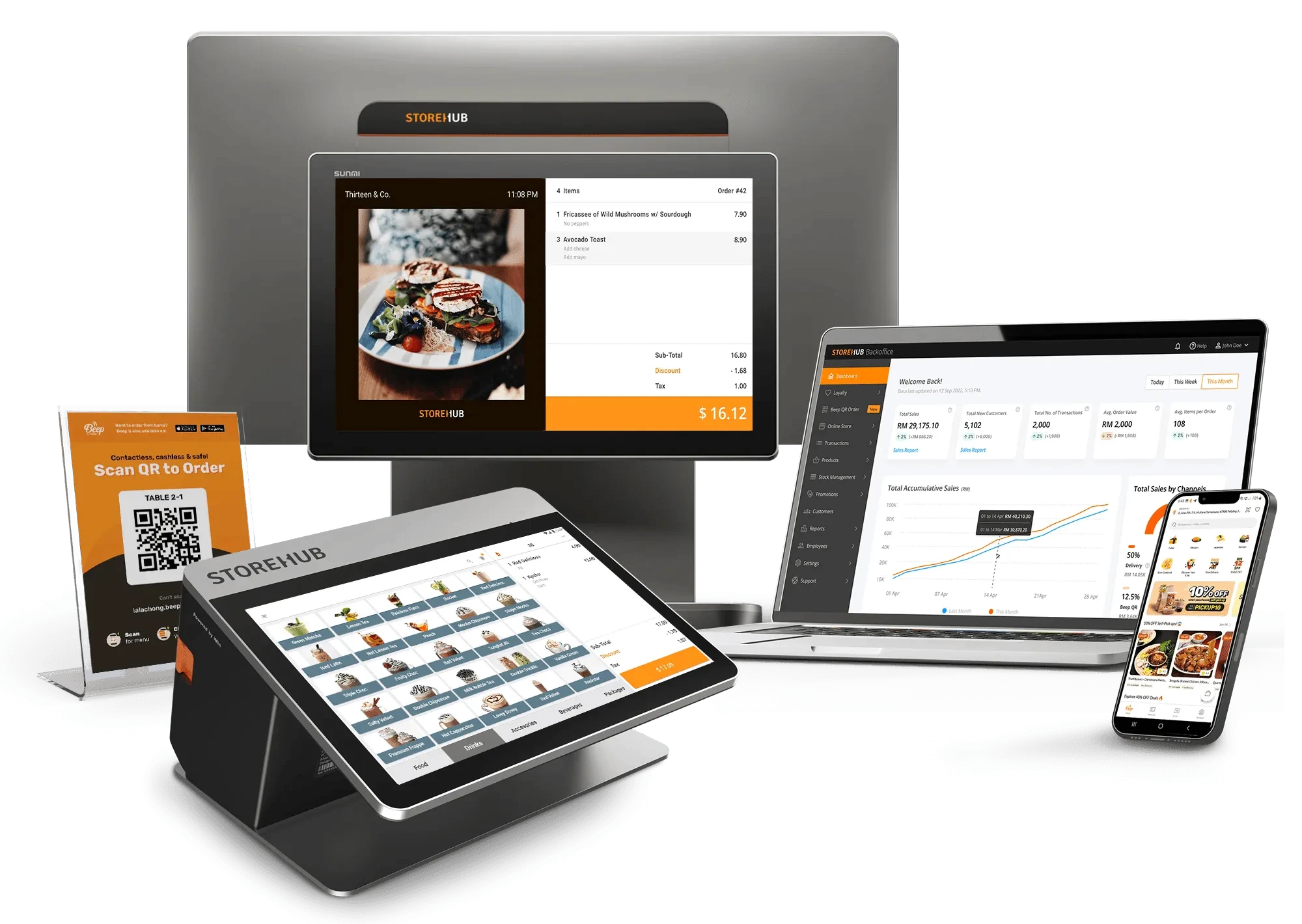
And if manpower is an issue when it comes to this, consider implementing a QR table ordering system like StoreHub’s QR Order & Pay so customers can just use their smartphones to scan a QR to view the menu, order, and pay. Easy!
One way to make wait time less painful for customers who are already seated is to offer them snacks or a basket of bread.
This gives your customers something to tide them over while they’re waiting for their food to arrive.
This is also a sign of hospitality and shows your customers that you truly welcome them to your establishment.
If your lines are long, go ahead and talk to the people in line so they don’t focus on the wait.
You can manage their waiting time expectations and even take orders early on so that their orders can be served quickly when they’re finally seated.
In summary, provide a positive experience for customers who are waiting with:
Suitable music
Free starters or snacks
Comfortable seating area
Great customer service
Offer free Wi-Fi if possible
Games/colouring mats at the table for children
7. Use collected data to improve business performance
As a Filipino business owner, you intuitively know when your peak hours are, right?
That’s cool and all, but there’s a real difference between a guess and actual data.
After all, data is king.
And with technology at its peak, you can gather all sorts of data over time.
The data you collect can give you useful insights into when your peak hours are, what your best-selling food or beverage is, who your best customer is, what the least ordered items are on your menu, and more!
Data can also be used to track and improve a variety of F&B-related things in the Philippines.
A proper F&B POS system like StoreHub is important because everything is about speed when it comes to the quick-serve business.
Use a POS system that can track data as well as give you easy-to-understand reports on things like peak hours and days, off-peak hours and days, best and worst selling items, sales growth, and so on.
Essentially, a smart POS system should be able to help you with:
Frequently Asked Questions (FAQs)
Why is data important for increasing restaurant sales?
Data removes guesswork. Knowing your exact peak hours, best-selling items, and slow-moving menu items helps you staff more efficiently, optimise menus, and focus on what actually drives revenue.How can a POS system help improve restaurant operations?
A POS system tracks sales in real time and generates easy-to-read reports on peak periods, item performance, and sales trends. This allows owners to make faster, better decisions instead of relying on intuition alone.Can POS data help improve menu and promotion strategies?
Yes. POS reports show which items sell well, which don’t, and how promotions perform. This makes it easier to design profitable menus, run targeted deals, and remove items that hurt margins.How does StoreHub support faster service and higher sales?
StoreHub helps speed up ordering and payment, reduce manual work, and improve table turnover. Features like QR Order & Pay also reduce waiting time, which directly impacts customer satisfaction and sales volume.What areas of an F&B business can StoreHub help manage?
StoreHub supports inventory management, employee management, customer relationship management (CRM), supplier tracking, and sales reporting—giving restaurant owners a complete view of their business in one system.